If you’re buying, selling, or even just thinking about the future of a self-storage facility, the way that deal gets financed might look very different.
On October 1, 2026, the Small Business Administration in the US rolled out a new set of underwriting rules that specifically target how business acquisitions are evaluated for SBA-backed loans. For an industry where SBA 7(a) loans have become one of the most common paths to ownership, these changes aren’t minor.
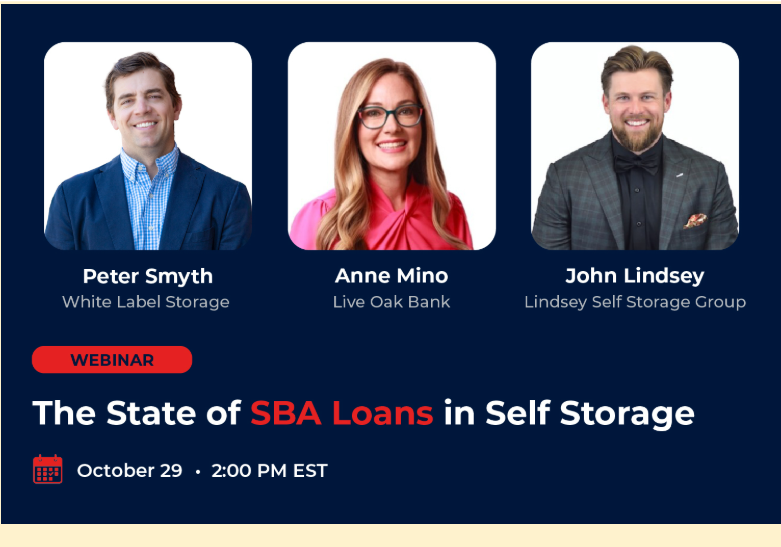
For owners and investors considering their next move, understanding how these rules could affect a potential deal will be the focus of our webinar hosted by White Label Storage, featuring Anne Mino of Live Oak Bank, John Lindsey of Lindsey Self Storage Group, and White Label Storage CEO Peter Smyth
Save Your Seat and Get a Recording of the Session
Proposed Changes in SBA Lending for Self-Storage
The new SOP 50 10 8.1 rewrites the rules for how acquisition loans are originated and underwritten, and almost every change raises the bar for qualifying:
- Higher DSCR floor: The debt service coverage ratio minimum has increased from 1.15x to 1.25x for first-time acquisitions, and lenders can no longer use projections to meet that number, meaning the business has to demonstrate coverage based on actual historical earnings.
- Quality of Earnings requirement: Deals at $3 million and above now require an independent QoE report that examines revenue quality, customer concentration, and whether reported cash activity matches bank statements.
- Full underwriting on every deal: The simplified 7(a) Small underwriting path is gone for all change-of-ownership transactions, so every acquisition now goes through full Standard underwriting regardless of size.
- Tighter equity injection rules: No more than half of the 10% minimum down payment can come from limited sources like full-standby seller financing or minority investor equity.
What This Means for Self-Storage Buyers and Sellers
While the SBA originally wanted to push these rules in a blanket fashion for all small businesses, it didn’t quite work out that way. Thanks to efforts from the storage industry, the rules will be applied differently to our industry.
Why Facility Performance Is the Whole Ballgame Now
Clean books, consistent occupancy, systematized operations, and revenue that doesn’t depend on one owner’s relationships or institutional knowledge are no longer just operational best practices.
They’re increasingly becoming decisive factors in how lenders evaluate assets.
The operators who start tightening up their financials, tracking KPIs consistently, and building the kind of paper trail that survives lender scrutiny are the ones who will have the most success when it’s time to sell, refinance, or bring in a partner. The deals that get funded are the ones that can prove their performance, not just promise it.
Tune in to our webinar to find out more.
About the Author
Rosa Atkinson is the content specialist at White Label Storage, a leading third-party storage management company. White Label combines data-driven operations, deep industry expertise, and innovative technology to help owners grow revenue and offload all the day-to-day work.
Source: White Label Storage