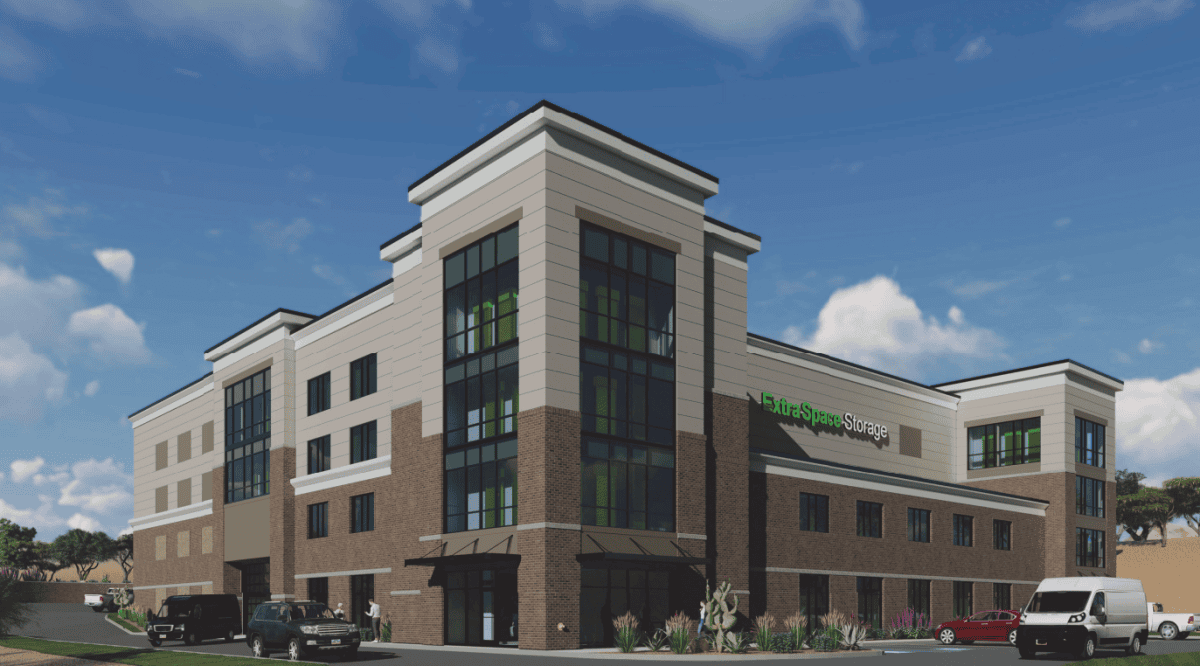
A proposed ban on building storage units in McCall will go before the McCall Area Planning and Zoning Commission next week.
The P&Z is set to review a slate of proposed updates to city code, most of which are tied to Valley County taking over administration of the McCall Impact Area on Jan. 1.
A public hearing on the changes will be held at 4:30 p.m. on Monday, Dec. 8, in the McCall Public Library Community Room. Remote participation instructions are available here.
The changes include banning commercial storage complexes from all zones within the city.
Currently, storage units are allowed in low-density residential zones, as well as areas zoned for industrial, business park, and commercial uses, with the approval of a conditional use permit.
The McCall City Council was briefed on the proposed storage ban during a work session on Nov. 21.
City staff: Storage ‘may not be compatible’ with McCall
“Warehousing and storage facilities may just not be compatible with our community zoning areas, both from an aesthetic and use perspective,” City and Sustainability Planner Meredith Todd said during the meeting.
“We thought we might put it in here for your consideration as a quick thing to just not even worry about storage anymore since it hasn’t really hit the mark on being the highest and best use,” Todd said.
In recent years, storage proposals in the McCall Impact Area have drawn significant public opposition amid concerns about aesthetics, traffic, and noise, as Valley Lookout reported.
Community and Economic Development Director Michelle Groenevelt framed the ban as a policy shift aimed at making the best use of land that could be developed with higher density housing.
“Part of the rationale is ‘why are we permitting self-storage in a jurisdiction that has utilities?’” Groenevelt said.
While new commercial storage operations would be banned within the city, the code update would grant an exception for storage buildings associated with residential developments.
The exception would require residential storage buildings to be sited at the rear of the property and screened from neighbors. The buildings would not be allowed to connect to utilities, under the proposal.
The updates would also explicitly ban the construction of private boat ramps into Payette Lake or the North Fork Payette River.
The P&Z will make a recommendation on the proposed changes to the city council, which is expected to make a final decision in January.
Impact area changes
Groenevelt said the “primary goal” of the changes is to align city codes with the revamped administration of the McCall Impact Area that is set take effect next month.
Mostly, that involves removing references throughout city code to the former joint review process used by the city and the county for impact area development applications.
The updates would shrink the P&Z from seven members to five members, while also eliminating a requirement for three of the members to be impact area residents.
Previously, Valley County appointed impact area representatives to the joint commission, which reviewed any impact area development applications before making a recommendation to the Board of County Commissioners.
Come January, any development application outside of city limits will be submitted to the Valley County Planning and Zoning Commission. Proposals will also be reviewed under county zoning laws rather than zoning laws resembling those in place within McCall.
Qualifications to serve on the city P&Z could also be updated if the proposed changes are adopted. No more than two members representing similar interests could serve on the commission at a time, under the proposal.
For example, no more than two developers or two real estate agents would be allowed to serve on the P&Z at the same time.
The public hearing process would also be changed if the proposed changes are signed into law.
Currently, public hearings end with an opportunity for the applicant to rebut any information shared in public comments during the hearing. That process would be changed to allow further public comments in response to any new information shared by the applicant during rebuttal.