 Self-storage operators have a responsibility to maintain a safe environment for tenants, employees, and surrounding properties. While most customers use their units appropriately, prohibited or illegal items can occasionally create serious safety, liability, and operational concerns.
Operators should clearly define prohibited property in their rental agreements and understand applicable state and local requirements. Here are ten categories that deserve particular attention.
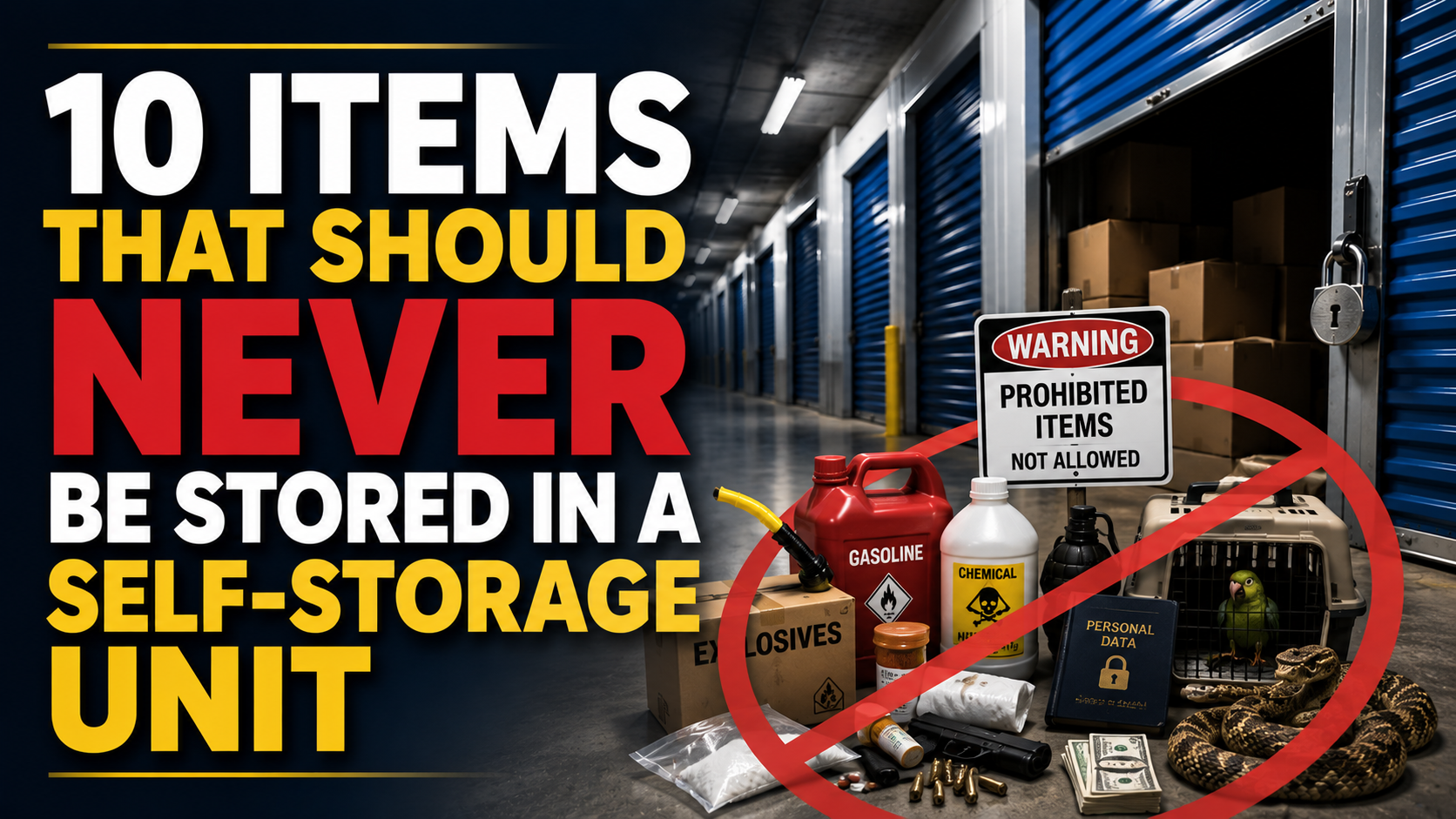
1. Stolen Property
Storage units should never be used to conceal stolen merchandise. Operators should train employees to recognize suspicious activity while avoiding assumptions about tenants based solely on the type or quantity of property being stored.
2. Illegal Drugs
Controlled substances possessed or distributed unlawfully present obvious legal and security concerns. Operators who encounter suspected criminal activity should follow company procedures and applicable laws rather than attempting to investigate the situation themselves.
3. Explosives and Dangerous Weapons
Explosives, ammunition, and certain weapons can create significant safety and liability risks. Rules governing firearms vary considerably by jurisdiction, so operators should ensure their rental agreements and policies comply with applicable laws and insurance requirements.
4. Flammable or Hazardous Materials
Gasoline, propane, certain chemicals, toxic materials, and other hazardous substances can present serious fire or environmental risks. Even products that are legal to possess may be prohibited from storage facilities because of fire codes, insurance requirements, or rental policies.
5. Live Animals
Storage units are not appropriate environments for pets, livestock, exotic animals, or other living creatures. In addition to potential legal concerns, keeping animals inside units creates serious health, safety, and animal-welfare issues.
6. Improperly Stored Vehicles
Vehicle-storage requirements vary by facility and jurisdiction. Operators should establish policies addressing registration, insurance, fuel levels, vehicle condition, and acceptable vehicle types. Owners should also verify applicable local requirements rather than assuming every unregistered vehicle is automatically illegal.
7. Counterfeit or Illegally Obtained Merchandise
Storage facilities can potentially be misused to warehouse counterfeit products or merchandise associated with criminal activity. Clear rental policies and appropriate cooperation with law enforcement can help operators address these situations when they arise.
8. Perishable Food
Food may not necessarily be illegal to store, but perishable goods can attract insects and rodents, create odors, and damage neighboring property. Most facilities should clearly restrict food or other materials capable of creating sanitation problems.
9. Illegally Obtained Personal or Financial Information
Stolen financial records, identification documents, credit card information, or other unlawfully obtained personal data can expose a facility to criminal investigations. Operators should treat suspected identity-theft activity seriously and follow appropriate legal procedures.
10. Human Remains
Human remains are subject to extensive laws governing possession, transportation, and disposition. Cremated remains may be treated differently depending on applicable law and facility policy, so operators should avoid broad assumptions and establish clear rules regarding what may be stored.
Strong Policies Are the Best Prevention
The most effective way to reduce prohibited storage is to establish expectations before a tenant moves in. Rental agreements should clearly identify prohibited items, and employees should be trained on how to respond when violations are suspected.
Operators should also use access controls, surveillance, routine property inspections, and consistent communication to help maintain a secure environment.
Most importantly, facility employees should not put themselves at risk by personally confronting suspected criminal activity. When circumstances warrant it, operators should follow established procedures and consult appropriate legal counsel, emergency services, or law enforcement.
Clear policies and consistent enforcement help protect not only the facility, but also employees, tenants, neighboring properties, and the long-term value of the business.
About the Author:
Brandon Robinson is the Co-Owner of Calvary Realty and Drop Zone Storage Centers. He specializes in self-storage investment sales, acquisitions, and facility operations, helping investors evaluate, acquire, and optimize self-storage facilities throughout the United States.
Source: Calvary Realty