UpSize Launches Revolutionary Partnership Model to Help Self-Storage Owners Expand Capacity with Zero Capital Outlay

UpSize (www.upsizeusa.com), an innovative new player in the self-storage solutions market, today announced the launch of its unique revenue-sharing model designed to help facility owners “upsize” their success without the traditional overhead or financial risk. As the U.S. self-storage industry continues to expand—projected to reach over $64 billion by 2026—many local facility owners face high construction costs and debt liquidity challenges when trying to meet rising demand. UpSize addresses these hurdles by providing high-quality, modular storage containers to existing facilities at zero cost to the owner. “We recognized that many…

2026 Self Storage Forecast: Soft Fundamentals, Strong Liquidity

As we enter 2026, the self-storage industry finds itself in a familiar, but evolving position. Transaction activity remains fluid and buyer interest is deep, while fundamentals continue to face stubborn pressure. Occupancy and rental rate growth have not yet returned to the “normal” levels experienced in the 2015–2020 pre-Covid run up, and many operators are still navigating the realities of a more competitive leasing environment. Industry-wide, the story continues to be one of pricing discipline, submarket selectivity, and operational execution, as the gap widens between facilities that can push rate…

Self-Storage Pricing Trends | December 2025

December 2025 Self-Storage Pricing Trends United States & Canada Market Overview In December 2025, the North American self-storage market remained active but increasingly shaped by a more cautious economic backdrop of elevated interest rates and disciplined capital markets. New construction continued to be a defining theme: the U.S. had 3,269 projects underway, representing roughly a 6.5% expansion of existing supply, while Canada, though smaller with 3,616 total stores, saw 146 projects in the pipeline, expanding supply by 7.4%. At the same time, higher financing costs encouraged a more cautious approach…

White Label Storage Launches Portfolio Dashboard to Simplify Reporting Across Facilities

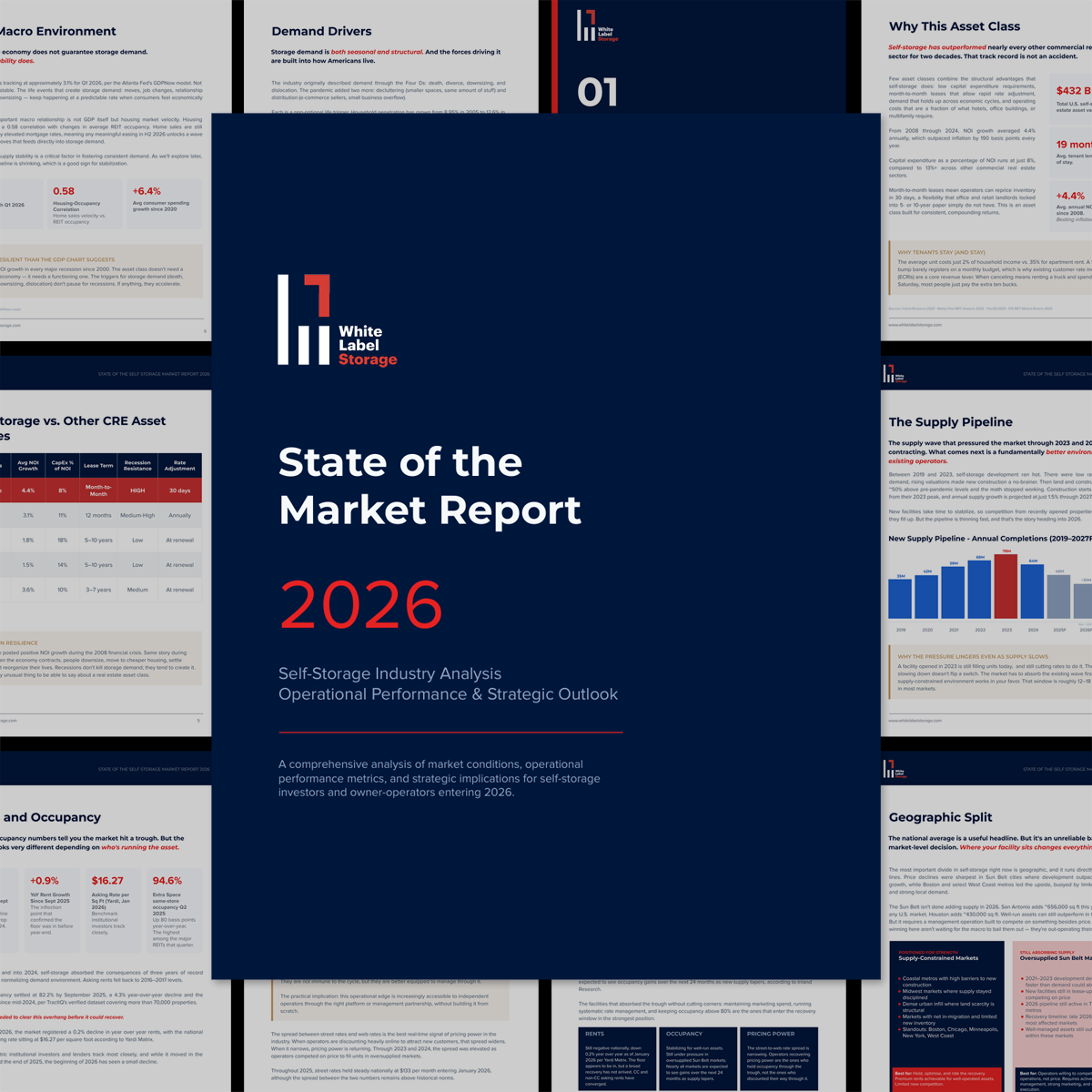
White Label Storage, a leading self-storage management company, is releasing a new portfolio analytics dashboard that provides storage owners and operators with clearer, more actionable visibility into performance across multiple facilities. This business intelligence tool provides a centralized view of operational and marketing performance, allowing owners and operators to understand facility health throughout their portfolio without relying on disconnected reports or manual analysis. It’s built to support faster, more confident decision-making by presenting essential performance information in a single, easy-to-navigate experience. Simple, Centralized Reporting for Storage Portfolios By working closely…

A Smarter Way to Evaluate Self-Storage Markets Across Your Portfolio

Managing a self storage portfolio across multiple markets has always required stitching together insights from individual locations, reports, and gut checks. Until now. We’re excited to introduce Portfolio Markets Update, a new feature inside StorTrack’s Explorer platform, designed to give operators, investors, and asset managers a clear, high-level view of how their portfolio is performing across markets, all in one place. From Single Markets to Portfolio-Level Clarity StorTrack has long helped investors understand what’s happening at the market level. But as portfolios grow, so does the need to step back…

How (and Why) to Optimize Your Google Ads

For most self-storage owners and operators, demand starts with a Google search. When someone types “storage units near me,” they’re not browsing—they’re solving an immediate problem. They need space, they need it nearby, and they need it now. That’s what makes Google Ads one of the most powerful demand-capture tools in self-storage today. It’s also what makes Google Ads so deceptively difficult to get right. At a high level, Google Ads seems simple: pick a few keywords, set a budget, write an ad, and wait for the phone to ring.…

State of CRE Debt Markets in 1Q 2026

After holding rates steady for most of 2025, the Federal Reserve ended the year by cutting the federal funds rate by 25 bps at 3 consecutive Federal Open Market Committee (FOMC) meetings, for a total of 75 bps of cuts for the year. The primary floating-rate index for commercial real estate mortgages, the Secured Overnight Financing Rate (SOFR), moved in lockstep with the Fed’s rate cuts, as is typical. Other index rates, such as WSJ Prime, which is a preferred alternative to US Treasury rates and SOFR for many regional…

Fast & EZ Self Storage Selects White Label Storage to Manage 11-Facility Portfolio

Fast & EZ Self Storage has officially selected White Label Storage to manage their portfolio of 11 facilities across Arizona, California, Nevada, North Carolina, South Carolina, and Oklahoma. This partnership brings over 2,200+ units onto the White Label Storage platform and marks a significant expansion of the company’s footprint in the Western and Southern United States. Ownership made the decision to transition management partners to accelerate the portfolio’s growth trajectory. Seeking a more performance-focused approach to operations, Fast & EZ Self Storage selected White Label Storage to optimize operational efficiency…

Bang for the Buck!

The key driver for asset value in the self-storage space is EBITDA or Net Operating Income. Every $1 in increased Net Income monthly increases the value of a facility by approximately $200.00. If you could invest capital to enhance value, where should you spend it? Here are the three investments that provide the generally largest bang for the buck! 1. Technology Upgrades In 2026, technology is the primary driver of operational efficiency and customer convenience. Management Software: This is the most vital technological investment, serving as the operational hub for…

StorTrack’s Market of the Month: Miami, FL

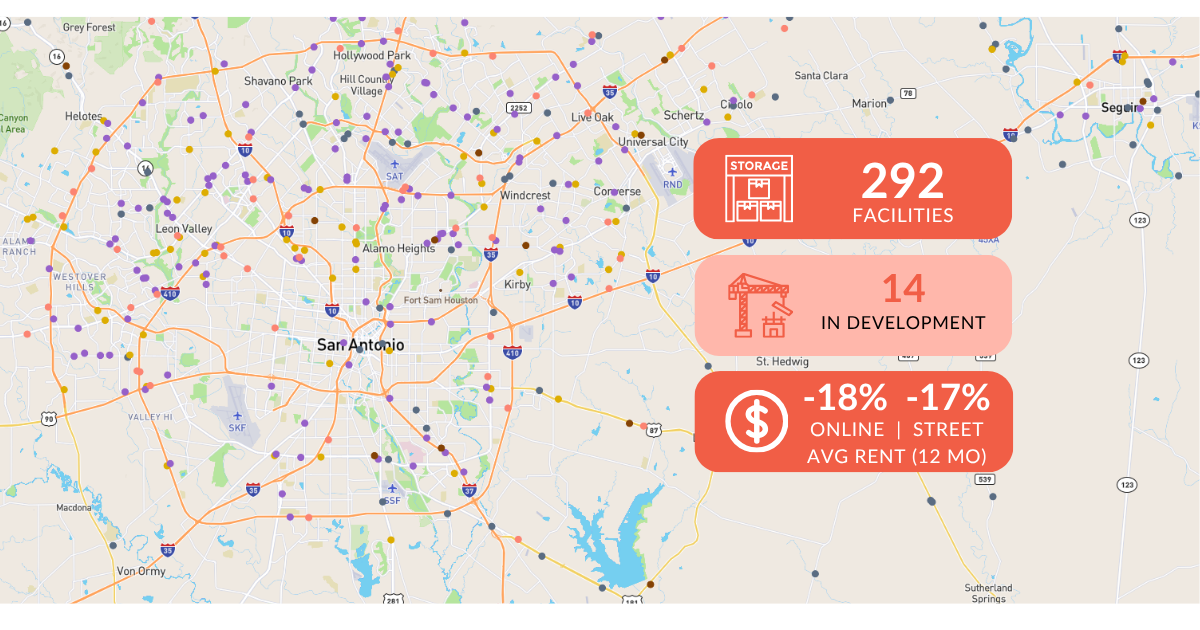
Within the City of Miami, the self-storage footprint is both substantial and intensely urban. The city contains more than 9.3 million net rentable square feet across 136 operating facilities, a level of density that equates to roughly 21 square feet per capita, well above what the industry often flags as a “balanced” market. On the surface, that metric might suggest saturation, but Miami’s underlying demand profile tells a very different story. As the economic and cultural core of Florida, the city continues to absorb population inflows, international residents, and high-velocity…