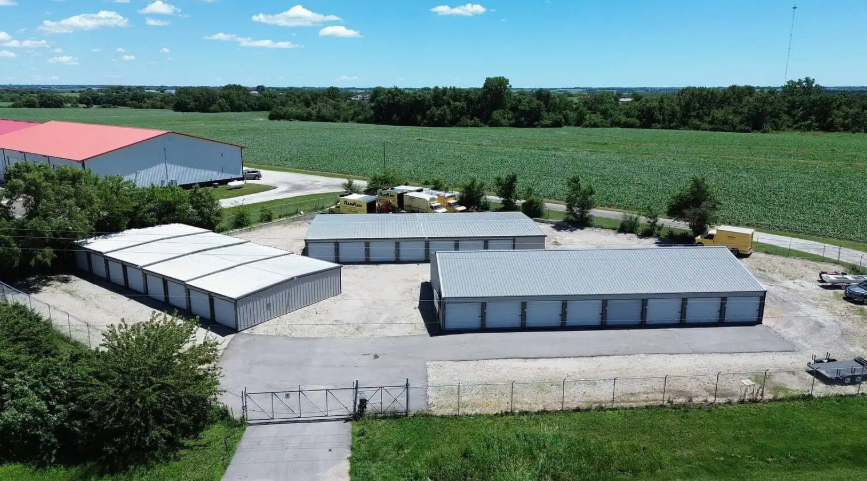
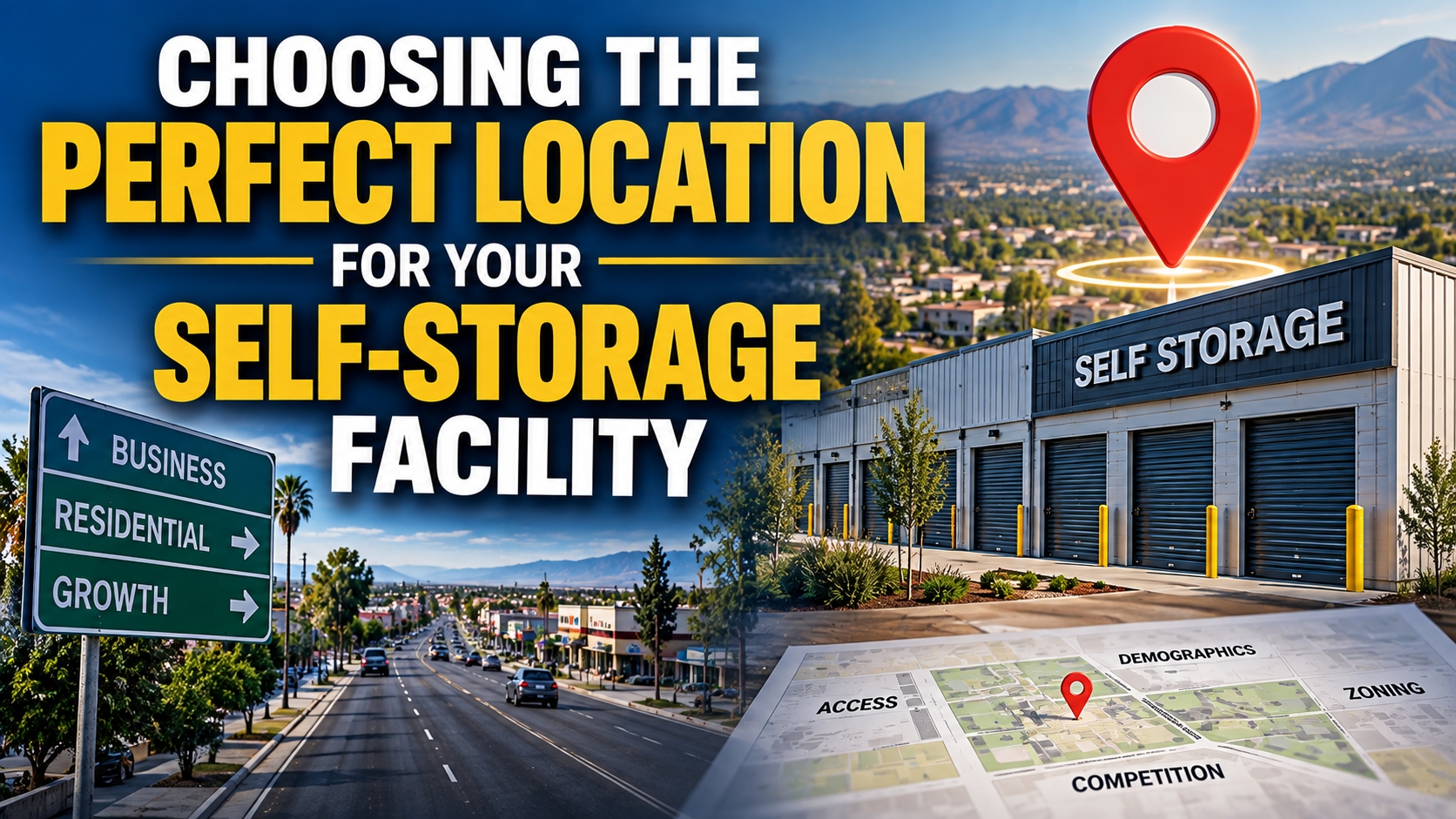
 In self-storage, location can significantly affect occupancy, rental rates, and long-term property value. A facility may be professionally managed and well maintained, but if it is difficult to access, surrounded by excessive competition, or located in an area with insufficient demand, achieving strong performance can be challenging.
For investors and developers evaluating a potential self-storage site, here are several factors that deserve careful consideration.
1. Accessibility Matters
Customers want storage that is convenient. A strong site should provide easy access from major roads and surrounding neighborhoods without requiring customers to navigate difficult turns, congested streets, or complicated entrances.
Consider traffic flow, ingress and egress, road conditions, and how easily moving trucks and larger vehicles can enter and maneuver around the property.
2. Look for Strong Visibility
Visibility can serve as a powerful form of advertising.
Facilities positioned along well-traveled roads can benefit from thousands of daily impressions from passing motorists. Prominent signage can further increase awareness and help customers remember the facility when a storage need arises.
However, visibility alone does not make a successful site. A highly visible property still needs sufficient underlying demand.
3. Study the Local Demographics
Understanding the surrounding population is essential when estimating storage demand.
Evaluate population density, household growth, renter versus homeowner concentrations, household income, housing construction, and residential development within the facility’s likely trade area.
Life transitions such as moving, downsizing, remodeling, divorce, and business growth frequently create storage needs. Markets experiencing population and housing growth can therefore present attractive opportunities.
4. Analyze Existing and Future Competition
Knowing how much storage already exists in the market is just as important as understanding population growth.
Identify competing facilities, their unit counts, rental rates, occupancy where available, amenities, and planned developments. A market that appears attractive today may look very different if several large projects are already in the development pipeline.
Investors should look for unmet demand rather than simply assuming that population growth guarantees success.
5. Investigate Zoning Before Committing
A promising property isn’t useful if self-storage cannot legally be developed there.
Review zoning requirements, conditional-use permits, building restrictions, setbacks, height limitations, signage rules, and other municipal requirements early in the process.
Local attitudes toward self-storage development can vary significantly, so understanding the entitlement process before purchasing land can prevent expensive surprises.
6. Consider Security and Site Design
The property’s physical characteristics should also support a secure and functional facility.
Evaluate lighting, fencing opportunities, controlled access, surveillance coverage, drainage, circulation, and emergency access. Good site design improves both security and the customer experience.
Location Is More Than an Address
The best self-storage location isn’t necessarily the property with the highest traffic count or the most prominent corner.
Successful sites combine customer demand, convenient access, visibility, appropriate zoning, manageable competition, and favorable development economics.
Before acquiring or developing a facility, investors should evaluate these factors together rather than relying on any single metric. A disciplined market and site analysis can help identify locations capable of supporting strong occupancy today while providing opportunities for long-term growth.
About the Author
Brandon Robinson is the Co-Owner of Calvary Realty and Drop Zone Storage Centers. He specializes in self-storage investment sales, acquisitions, and facility operations, helping investors evaluate, acquire, and optimize self-storage facilities throughout the United States.
Source: Calvary Realty