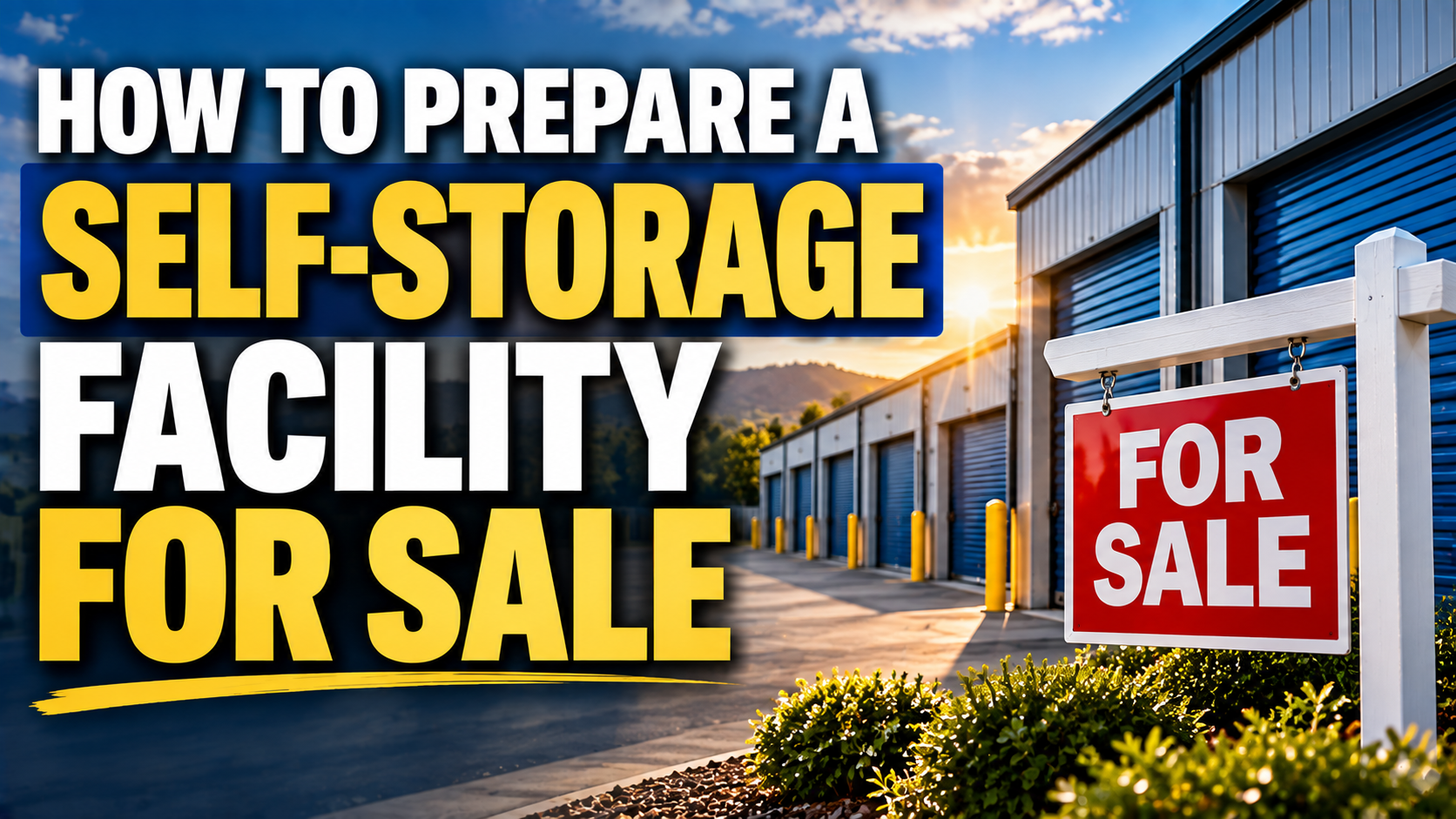
 Selling a self-storage facility involves more than placing the property on the market and waiting for offers. The work an owner completes before listing can influence buyer confidence, due diligence, negotiations, and ultimately the property’s marketability.
A well-prepared facility allows buyers to quickly understand the opportunity and reduces uncertainty during the transaction. Here are six areas owners should address before bringing a self-storage property to market.
1. Address Deferred Maintenance
Start by walking the property from a buyer’s perspective.
Look for damaged doors, roof issues, broken gates, potholes, malfunctioning lights, fencing problems, drainage concerns, and other deferred maintenance. Not every issue requires a major capital investment before selling, but obvious problems can cause buyers to increase their repair estimates or become more cautious about the property.
Correcting smaller issues before listing can eliminate unnecessary objections.
2. Improve the Facility’s Appearance
First impressions matter in self-storage.
Fresh paint, clean drive aisles, maintained landscaping, visible signage, clean offices, and properly functioning gates can make a significant difference in how buyers perceive an asset.
The goal isn’t necessarily to complete an expensive renovation. Instead, demonstrate that the property has been professionally maintained and cared for.
3. Get the Financials in Order
For serious buyers, the property’s financial performance will ultimately matter more than cosmetic improvements.
Prepare accurate profit-and-loss statements, rent rolls, bank records, tax returns where appropriate, utility expenses, payroll information, insurance costs, property taxes, and other operating records.
Buyers will use this information to verify revenue, normalize expenses, and calculate Net Operating Income. Clean financial records can make underwriting easier and reduce questions during due diligence.
4. Organize Your Operational Data
Financial statements tell only part of the story.
Owners should also organize information regarding physical and economic occupancy, unit mix, rental rates, delinquency, tenant insurance, discounts, concessions, historical rate increases, and other operating metrics.
Providing several years of historical information when available allows buyers to identify trends and better understand the property’s performance.
5. Identify Property Issues Before the Buyer Does
Consider evaluating the property’s physical condition before going to market.
Potential problems involving roofs, electrical systems, drainage, paving, security equipment, or structural components can become significant negotiating points if they’re discovered unexpectedly during due diligence.
Knowing about these issues beforehand allows the seller to determine whether to repair them, disclose them, or price the property accordingly.
6. Prepare Professional Marketing Materials
Once the property and records are ready, the opportunity needs to be presented clearly.
Quality photography, drone imagery where appropriate, maps, unit-mix information, financial summaries, market information, and a professional offering memorandum can help qualified buyers quickly understand the investment.
Strong marketing should do more than make the facility look attractive. It should clearly communicate the property’s financial performance, competitive advantages, and potential opportunities for a new owner.
Preparation Can Protect Value
One of the biggest mistakes an owner can make is waiting until an offer is received to begin organizing the property and financial records.
Preparation before listing can uncover issues while the seller still has time to address them. It can also reduce surprises during due diligence and demonstrate to buyers that the facility has been professionally operated.
When the property, operations, financials, and documentation are all ready before going to market, sellers put themselves in a stronger position to attract qualified buyers and move toward a successful closing.
About the Author
 Brandon Robinson is the Co-Owner of Calvary Realty and Drop Zone Storage Centers. He specializes in self-storage investment sales, acquisitions, and facility operations, helping investors evaluate, acquire, and optimize self-storage facilities throughout the United States.
Source: Calvary Realty