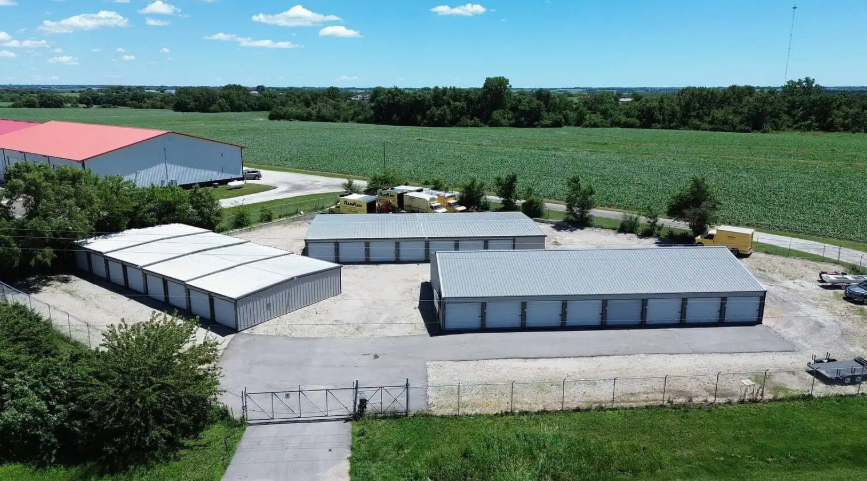
 For many decades, self-storage was a remarkably simple business. The product was almost always the same: a single-story, drive-up facility on a piece of well-located land, built efficiently, operated leanly, and supported by a fixed-cost base that allowed operators to absorb economic cycles with minimal disruption. It was, in many ways, a beautiful business model. Low overhead, sticky tenants, modest reinvestment requirements, and steady cash flow. The asset class earned its reputation as one of the most durable in commercial real estate precisely because it kept things simple.
That simplicity has changed dramatically over the past decade. As institutional capital flowed into the sector, development standards evolved alongside it. Today’s new self-storage facility looks less like a traditional storage property and more like a small office building: multistory, climate-controlled, glass-paneled, sometimes topped with solar arrays, and outfitted with elevators, sprinkler systems, and amenity-driven design features intended to appeal to a more sophisticated customer and a more institutional buyer. Class A self-storage has become the standard for new development in most major markets, and for several years, this evolution made economic sense. Rents were climbing, occupancy was strong, and buyers were paying premium pricing for institutional-quality product.
Then COVID arrived, and the sector experienced an extraordinary surge in demand. Move-in activity, household mobility, and pricing power combined to produce historic rate growth. Multistory, climate-controlled properties, with their higher rents per square foot and higher break-even thresholds, performed exceptionally well in this environment. The business model worked. The numbers worked. And so more of these properties got built, and then more, and then more. Developers and capital sources, encouraged by record rent growth and aggressive underwriting assumptions, leaned heavily into Class A construction. Many of these projects broke ground in 2021 and 2022, expecting that the pricing environment of the pandemic would persist.
It did not. As we have discussed in prior Market Monitors, the operating environment has softened meaningfully since those peaks. Occupancy has normalized, street rates have come down in many markets, and rental rate growth, particularly on existing customers, has become significantly more difficult to push. The aggressive in-place rent strategies that drove revenue during the recovery years are now drawing public scrutiny, and operators are recalibrating how they balance rate growth against occupancy and customer trust. At the same time, expenses on these larger, more complex buildings have not normalized along with revenue. They have continued to climb. Insurance premiums remain elevated. Property taxes are up sharply across many states. Repair and maintenance costs on more complex systems, elevators, HVAC, and life safety, are inherently higher. Payroll has risen as labor markets have tightened. The result is a widening gap between revenue, which is under pressure, and expenses, which are not.
This dynamic is most visible in new Class A product. A multistory climate-controlled facility can cost two to three times more per square foot to build than a traditional single-story drive-up, and it often carries a meaningfully higher operating expense load throughout its life. When the rent environment supports those costs, the model produces strong returns. When it does not, the model becomes structurally challenged. The expense base does not flex. The fixed costs are now embedded. And in markets where new supply continues to absorb slowly, the consequences land squarely on the operator’s bottom line.
Which raises a question worth asking honestly: has the industry drifted too far from what made it work in the first place?
The original strength of self storage was never the building. It was the business model. Simple footprint. Low expense ratio. Disciplined site selection. Reasonable rents that customers were willing to pay because the value proposition was clear. Operators competed on service, accessibility, and trust, not on lobby finishes or revenue management algorithms. The customer experience was straightforward, and the customer relationship reflected that. A modest, well-located, well-run drive-up facility could perform reliably for decades with relatively little reinvestment.
There is a strong argument that the industry would benefit from rediscovering some of those fundamentals. Not by abandoning Class A development entirely, infill multistory product still makes sense in dense urban markets where land is constrained and rents support the cost basis, but by recognizing that the single-story, drive-up model still has a meaningful role to play. Lower expense ratios. More resilient margins. Less dependence on aggressive rate strategies to make the numbers work. And perhaps most importantly, a customer experience built on consistency and fairness rather than introductory rates and follow-on increases.
For owners and investors evaluating where the sector goes from here, this is more than a development question. It is a strategic one. The properties that perform best in the next phase of the cycle are likely to be the ones whose cost structures can absorb a softer revenue environment without forcing operators into pricing decisions that strain customer relationships. Simplicity, in this market, has real value. Disciplined expense control, modest reinvestment requirements, and a back-to-basics customer approach may prove to be the most durable formula in an industry that has spent a decade building toward something more complex.
At Argus, we continue to see this dynamic play out in the assets we underwrite and the transactions we advise on. The deals that screen best today are not necessarily the newest or the most amenity-rich. They are the ones with clean expense profiles, sticky customer bases, and operating models that do not depend on outsized rate growth to justify the basis. Self storage remains an exceptional asset class. The question for the industry is whether the path forward looks more like the office building it has become, or more like the simple, durable, beautifully understated business it used to be.
Author: Cole Carosella, Argus Self Storage Advisors