What’s Really Driving the Self Storage Market in 2026
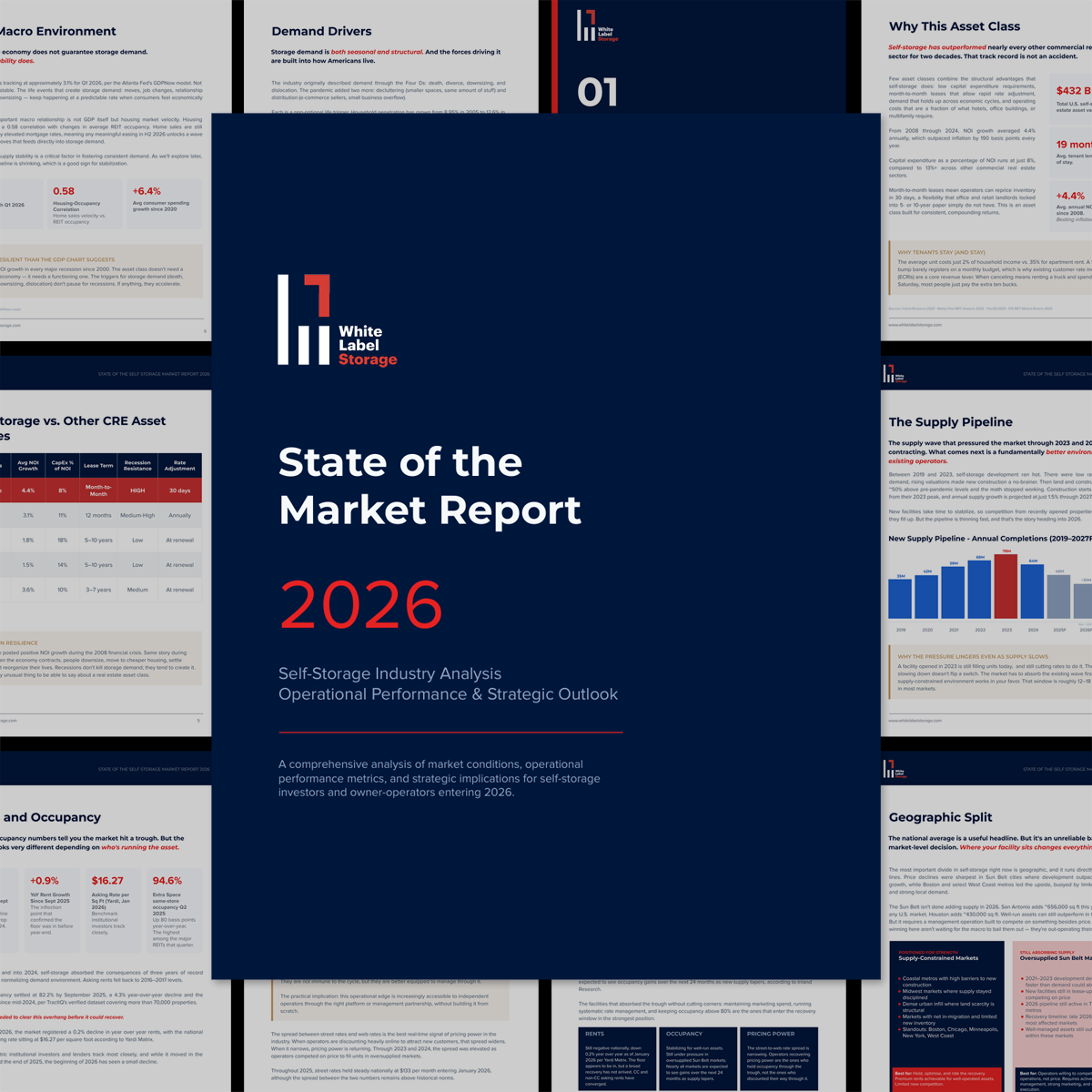
There’s a version of self-storage investing where you don’t have to pay close attention to the market. You buy a facility, keep occupancy reasonably high, and the fundamentals of the asset class do the heavy lifting. For most of the last two decades, honestly that approach worked fine. But times are changing. The last three years reshuffled every assumption the industry ran on. Interest rates doubled in eighteen months and stayed there. A historic construction wave ran headlong into normalizing post-pandemic demand. The REITs perfected the art of getting new…

White Label Storage Launches AI Call Agent to Simplify Tenant Payments

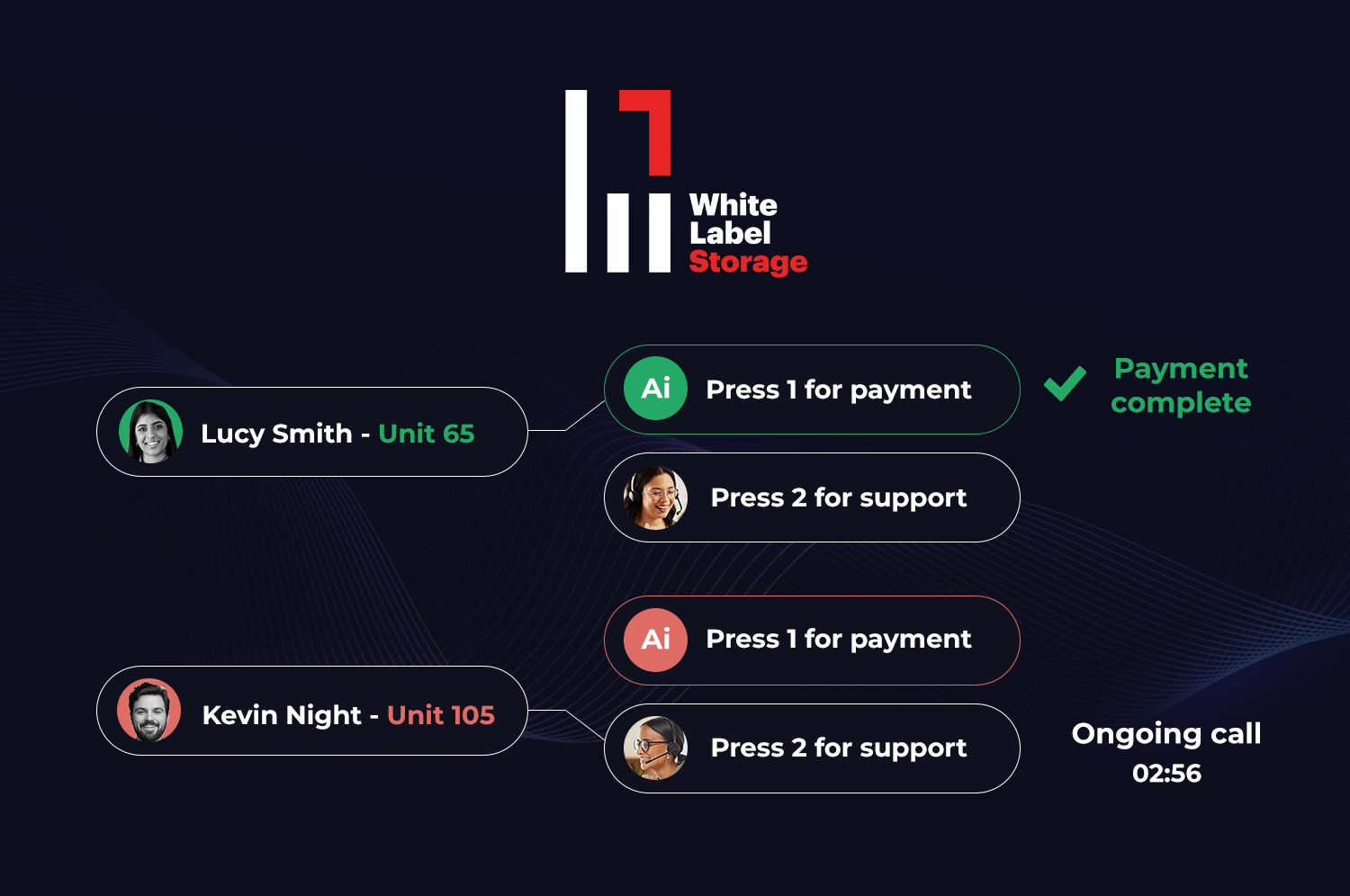
White Label Storage, a leading self-storage management company, today announced the launch of its AI-powered call center agent, enabling tenants to complete storage payments over the phone through a secure, compliant conversational system. The AI payment agent is currently rolling out across the White Label Storage managed portfolio, with full availability expected across all facilities by the beginning of Q2 2026. Payment-related inquiries represent a significant share of self-storage call volume, particularly at the start of each month. White Label Storage developed this AI payment agent to improve the customer…

ENERGY | FEDS | AI | STORAGE

Every week brings new economic headlines. Energy policy. Interest rates. Artificial intelligence. Global politics. For self-storage owners and investors, the challenge is not access to information. It’s understanding what actually matters to asset performance and long-term value. Here is what we are watching. ENERGY China has made its goal of energy independence clear. While that may seem distant from self-storage, energy policy influences construction costs, operating expenses, supply chain pricing, and capital markets. Over time, shifts in global energy alignment impact development feasibility and replacement cost assumptions across commercial real…

A Tale of Two Markets: Soft Operations, Strong Values

Over the past several years, the self-storage industry has found itself operating in a unique and, at times, contradictory environment. On one hand, operating fundamentals, particularly occupancy and rental rate growth, have softened meaningfully from their pandemic-era highs. On the other hand, investor demand for self-storage remains robust, capital is plentiful, and asset values continue to hold firm with cap rates being lower than historical averages considering the cost of debt today. This divergence between operating performance and investment demand has created one of the most nuanced ownership environments we…

The Hidden Cost of Poor Customer Service in Self-Storage

Most self-storage operators know their occupancy rate by heart. What far fewer operators can quantify is how much poor customer service is costing them. That’s not because it doesn’t matter, but because the impact tends to fly under the radar, until one day it doesn’t. Customer service has quietly become a critical revenue driver in self-storage. When competition is intensifying, consumer sentiment is king, and Google reviews carry more weight than ever, operators who treat service as a secondary priority aren’t just leaving money on the table — they’re actively…

4 Steps to Building a Better Marketing Budget

Most self-storage operators know they need to spend money on marketing. Fewer know how much, and even fewer have a clear framework for determining whether that spend is generating a return worth the investment. In a previous post, I covered the strategic case for thinking about marketing through the lens of lifetime value and customer acquisition cost (LTV:CAC). Here, I want to get more practical: what does a reasonable marketing budget actually look like, and how do you calculate the metrics that tell you whether it’s working? 1. Setting a…

How to Actually Measure Your Marketing

In self-storage, marketing is too often treated as an expense. A landlord’s default posture tends to be similar to how they might approach selecting a landscaper. The cost is scrutinized aggressively like any other expense line item. This approach makes sense because self-storage is a fixed inventory business. You don’t improve performance by selling more product. You do so by managing what already exists better. Historically, that’s pushed owners toward a very specific playbook for increasing NOI: Keep occupancy high, Raise rents, and Control expenses Within that framework and probably…

UpSize Launches Revolutionary Partnership Model to Help Self-Storage Owners Expand Capacity with Zero Capital Outlay

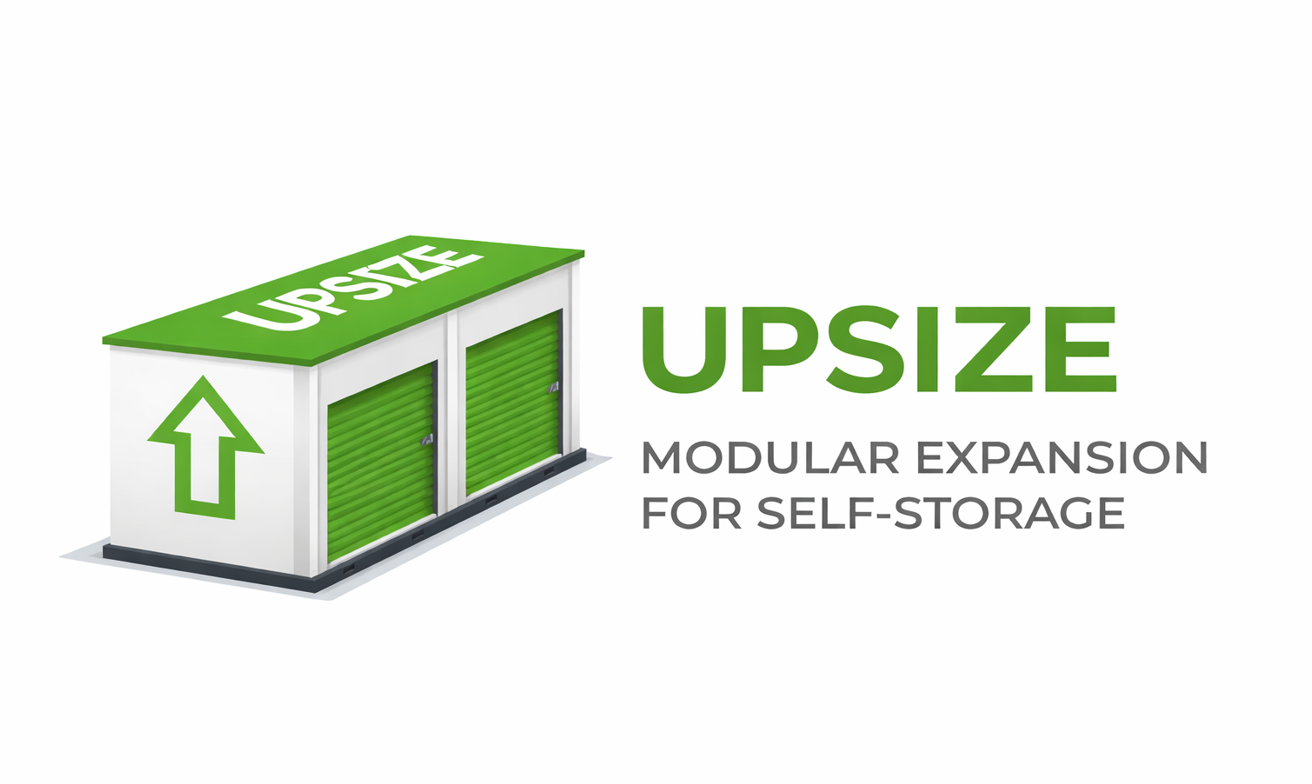
UpSize (www.upsizeusa.com), an innovative new player in the self-storage solutions market, today announced the launch of its unique revenue-sharing model designed to help facility owners “upsize” their success without the traditional overhead or financial risk. As the U.S. self-storage industry continues to expand—projected to reach over $64 billion by 2026—many local facility owners face high construction costs and debt liquidity challenges when trying to meet rising demand. UpSize addresses these hurdles by providing high-quality, modular storage containers to existing facilities at zero cost to the owner. “We recognized that many…

2026 Self Storage Forecast: Soft Fundamentals, Strong Liquidity

As we enter 2026, the self-storage industry finds itself in a familiar, but evolving position. Transaction activity remains fluid and buyer interest is deep, while fundamentals continue to face stubborn pressure. Occupancy and rental rate growth have not yet returned to the “normal” levels experienced in the 2015–2020 pre-Covid run up, and many operators are still navigating the realities of a more competitive leasing environment. Industry-wide, the story continues to be one of pricing discipline, submarket selectivity, and operational execution, as the gap widens between facilities that can push rate…

Self-Storage Pricing Trends | December 2025

December 2025 Self-Storage Pricing Trends United States & Canada Market Overview In December 2025, the North American self-storage market remained active but increasingly shaped by a more cautious economic backdrop of elevated interest rates and disciplined capital markets. New construction continued to be a defining theme: the U.S. had 3,269 projects underway, representing roughly a 6.5% expansion of existing supply, while Canada, though smaller with 3,616 total stores, saw 146 projects in the pipeline, expanding supply by 7.4%. At the same time, higher financing costs encouraged a more cautious approach…